About 42 minutes
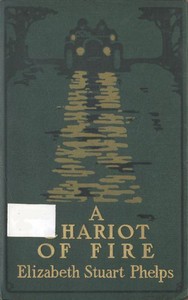
A Chariot of Fire — A Closer Reading
Adventure Picaresque Fiction
9,609 recorded words. 20 minutes difference from this book's estimate.
View Gutenberg source #34254
The catalog record for Unc' Edinburg: A Plantation Echo — Inside the Classic provides practical reading context through 14,244 words, 1 hr 2 min estimated reading time, and 2 detected text sections.
The text analysis averages about 28.6 words per sentence, while the detected sections provide another way to judge how the source is divided.
Project Gutenberg metadata also associates the work with “Plantation life -- Fiction,” connecting these edition facts with the source record’s subject description.
Explore this collection
These alternatives are selected using recorded categories and estimated reading time.
About 42 minutes
Adventure Picaresque Fiction
9,609 recorded words. 20 minutes difference from this book's estimate.
View Gutenberg source #34254About 198 minutes
Adventure Picaresque Fiction
45,416 recorded words. 136 minutes difference from this book's estimate.
View Gutenberg source #34849About 229 minutes
Adventure Picaresque Fiction
52,451 recorded words. 167 minutes difference from this book's estimate.
View Gutenberg source #34284Search stored excerpts and compare books → Choose by your preferences →
Choices use stored catalog measurements. Estimates vary with reading speed. A shared category is a catalog label, not a claim that two books have the same argument or literary quality.
Search reads excerpt text stored with this catalog and links to its associated Gutenberg record. The connection is stored in the site database; this tool does not recheck that every excerpt is word-for-word identical to that external record. Excerpt search does not cover every chapter and does not verify historical publication dates.
Catalog snapshot checked: 2026-09-26. Coverage: 91 public books, 91 available source excerpts.
Calculated from edition completeness, EPUB availability, text structure and catalogue metadata. Not a user rating.
Total of 100 points, scaled to a 2.5-5.0 range. Editions with an empty description or a missing EPUB file are not scored.
Public-domain source text
The source text is kept in the dedicated reader, separate from this catalogue record and its commentary.
Thomas Nelson Page's Unc' Edinburg: A Plantation Echo opens with a frame narrative: the unnamed narrator meets Unc' Edinburg, an elderly Black driver, on a muddy Virginia road on Christmas Eve. The story is delivered almost entirely in Unc' Edinburg's dialect, a deliberate authorial choice that shapes the tale's texture and perspective. Page uses this voice not merely for local color but to control the pace and emotional register—Unc' Edinburg's speech is ruminative, full of digressions and repeated phrases like "Gord!" and "sutney," which anchor the reader in his oral storytelling tradition. The excerpts show how Page builds suspense through the driver's hesitant revelations, such as the cryptic remark that "de wuss Christmas I ever seen tunned out de best in de een," a line that foreshadows tragedy without disclosing it.
Page's rendering of Unc' Edinburg's dialect is systematic and consistent, relying on phonetic spelling, grammatical shifts, and a limited vocabulary that conveys both wisdom and vulnerability. Phrases like "I seen he eye light on her" and "hit teck ole times to meck a sho'-'nough, tyahin'-down Christmas" are not merely decorative; they carry the story's emotional weight. The dialect establishes Unc' Edinburg as the sole authoritative voice for the events he describes, creating an intimacy that a standard narrator could not achieve. Page also uses dialect to mark social boundaries: the narrator speaks standard English, while all the Black characters speak in dialect, reinforcing the plantation hierarchy even as Unc' Edinburg's narrative dominates. The repetition of key phrases—"Dat done de business!"—functions as a refrain, punctuating moments of crisis and giving the tale a rhythmic, almost musical structure.
The opening pages establish a tension between the present (the muddy road, the narrator's small satchel) and the past that Unc' Edinburg evokes. The narrator's initial suspicion—based on the lack of a trunk—is quickly overcome, but the frame remains a quiet reminder of the distance between the listener and the story. Page uses this framing to comment on change: Unc' Edinburg contrasts "free-issue niggers" who "don' know what Christmas is" with the "sho'-'nough" Christmases of old, a lament for a lost social order that the narrative itself romanticizes. The frame also allows Page to include details that would be implausible in a first-person account, such as the narrator's physical description of Unc' Edinburg as "the queerest-looking, raggedest old darkey conceivable." This external perspective subtly distances the reader from the dialect tale, reminding us that we are overhearing a story, not living it.
Throughout the excerpts, Page uses imagery of eyes and light to signal emotional states. Unc' Edinburg notes that when Marse George learned of Miss Charlotte's betrayal, "I see de light done pass from him, an' de darkness done wrap him up in it." This metaphor recurs: Marse George's eyes become "wistful, like he al'ays lookin' far 'way," and later, after his parents' deaths, he walks the house at night, unable to sleep. The motif extends to the supernatural—Aunt Haly claims "harnts" walk because the rooms were altered, and the ghosts "kyarn git no rest 'cause dee kyarn fine 'em." This linking of emotional desolation with physical darkness and haunting gives the story a gothic undertone, even as Unc' Edinburg's earthy voice keeps it grounded. The frontispiece caption, "I seen he eye light on her as she came down the steps smilin'," establishes this motif from the first page, connecting love at first sight with a visual spark that later extinguishes.
Page's dialogue reveals a world where violence is ever-present but often contained. Unc' Edinburg describes how Marse George, upon finding his rival, "leetle mo' cut him all to pieces" and "weared he whup out on him," yet the narrative emphasizes that the violence is measured: Marse George sends a challenge, then warns he will "cowhide him agin ef he ever heah any mo' from him." The rival's response—sending back the ring and pictures "'dout a wud"—is a passive-aggressive act that hurts more than a physical blow. Page also shows restraint in the narrator's own reactions; he never interrupts Unc' Edinburg's story, allowing the violence to be reported rather than dramatized. This indirection, combined with Unc' Edinburg's matter-of-fact tone, makes the cruelty of the plantation system—the separation of couples, the horsewhipping, the inability to buy a loved one—feel both ordinary and devastating.
Readers should attend to the way Page balances Unc' Edinburg's nostalgic voice with the harsher realities it half-reveals. The driver's loyalty to Marse George and the old ways does not erase the pain of separation and loss that runs through his tale. The framing device, with its muddy road and Christmas Eve setting, invites us to consider how stories of the past are shaped by the teller's present. Pay attention to what Unc' Edinburg chooses to emphasize—and what he passes over quickly—as these silences may speak as loudly as his vivid dialect.
The rain kept time with Unc' Edinburg's cadence, that slow Virginia drawl wrapping around tales of honor and quiet heartbreak. Afterwards, the weight of that lost world lingered, and I found myself reaching for something about the pines themselves, their resilience. The Strength of the Pines — Edition Insights felt like a natural turn, a whispered answer to the same old question of what endures.
Capture what you thought, learned, and would like to remember.