About 62 minutes
Unc' Edinburg: A Plantation Echo — Inside the Classic
Adventure Picaresque Fiction
14,244 recorded words. 20 minutes difference from this book's estimate.
View Gutenberg source #34016
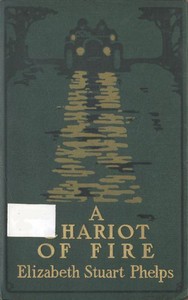
The source record for A Chariot of Fire — A Closer Reading measures this digital text at 9,609 words, 42 min estimated reading time, and 2 detected text sections.
The text analysis averages about 15.0 words per sentence, while the detected sections provide another way to judge how the source is divided.
Project Gutenberg metadata also associates the work with “Short stories,” connecting these edition facts with the source record’s subject description.
Explore this collection
These alternatives are selected using recorded categories and estimated reading time.
About 62 minutes
Adventure Picaresque Fiction
14,244 recorded words. 20 minutes difference from this book's estimate.
View Gutenberg source #34016About 198 minutes
Adventure Picaresque Fiction
45,416 recorded words. 156 minutes difference from this book's estimate.
View Gutenberg source #34849About 229 minutes
Adventure Picaresque Fiction
52,451 recorded words. 187 minutes difference from this book's estimate.
View Gutenberg source #34284Search stored excerpts and compare books → Choose by your preferences →
Choices use stored catalog measurements. Estimates vary with reading speed. A shared category is a catalog label, not a claim that two books have the same argument or literary quality.
Search reads excerpt text stored with this catalog and links to its associated Gutenberg record. The connection is stored in the site database; this tool does not recheck that every excerpt is word-for-word identical to that external record. Excerpt search does not cover every chapter and does not verify historical publication dates.
Catalog snapshot checked: 2026-09-26. Coverage: 91 public books, 91 available source excerpts.
Calculated from edition completeness, EPUB availability, text structure and catalogue metadata. Not a user rating.
Total of 100 points, scaled to a 2.5-5.0 range. Editions with an empty description or a missing EPUB file are not scored.
Public-domain source text
The source text is kept in the dedicated reader, separate from this catalogue record and its commentary.
The story opens with a man desperate to reach Gloucester after a train delay. Phelps immediately establishes a world of friction: the train 'slowed reluctantly,' the fog 'clung like a sponge,' and the baggage handler's comic litany of lost pets contrasts with the passenger's 'acute calamity.' This collision of tones—the mundane and the urgent—sets up a narrative that moves between the perspectives of a poor father, a rich automobilist, and a guilty chauffeur. The author's diction is precise: a danger-light looks 'like a splash of blood,' and a poor man's unspoken question—'What will it cost?'—is described as closing 'like a strangling hand upon the throat of the poor.'
Phelps marks class through speech patterns and word choice. The opening passenger, Jacob Dryver, speaks in short, urgent phrases: 'I've got to get to Gloucester, sir!' and 'I tell you I've got to get there!' His language is plain, repetitive, and stripped of ornament. In contrast, the wealthy Hurlburt Chester uses measured, abstract terms: 'It's purely a question of feeling—it's a question of right within a right.' The chauffeur Thomas's note is written in uneducated dialect—'Ime goin away while I can'—and misspells 'manslaughter' as 'manslorter.' These linguistic markers are not mere decoration; they reinforce the social distances that drive the plot. The narrator's own voice shifts register when describing the poor man's internal experience: 'Till he has answered this question a poor man may not love a woman or rear a child; he may not bury his dead or save his living.' The sentence structure—parallel, biblical in rhythm—elevates the moment without sentimentality.
Phelps loads her descriptions with concrete, almost tactile details that carry emotional weight. The fog 'clung like a sponge'; the danger-light 'looked like a splash of blood.' A bull-terrier yelps in darkness, a lost parrot 'swears in several foreign languages.' These details are not random: they create a world where things press in on people. Later, the flowers in the front yard are 'knee-deep in snow'—an image that appears in the illustrations list and suggests a harsh, indifferent environment. The carmine dahlias 'turn their large face and gaze' at Jacob, and nasturtiums 'seemed to smoke before them.' The natural world is animate, watchful, almost accusatory. Even the Aurora—the car that caused the accident—is named like a character, a machine with agency. Phelps uses these sensory anchors to ground moral dilemmas in physical reality, making abstract questions of guilt and money feel immediate and heavy.
The story's key moral conflict unfolds almost entirely through dialogue. When Chester tells his wife Mary about the chauffeur's confession, their exchange is terse and charged. Mary asks, 'Do they know?' and when Chester shakes his head, she presses: 'You'll tell them, of course?' He replies, 'I haven't made up my mind.' The scene is domestic—Chester is in bed, the baby 'jabbering loudly'—but the stakes are high. Mary's worry is described as 'a sweet-natured way,' yet her passion breaks through: 'I'm sure you ought to tell them!' Chester's response—'Perhaps so. But I'd like to think it over'—reveals a man weighing reputation against conscience. The dialogue does not resolve the tension; it leaves the reader inside the uncertainty. Phelps avoids easy moralizing by letting each character speak from their own position, and by showing the physical toll of the decision: Chester covers his face, is 'greatly over-worn,' and the strain 'seemed now to have leaped again with the spring of a creature.'
The story withholds the accident itself. We see only its aftermath: the delayed train, the desperate father, the chauffeur's note, the rich man's burden. This structural choice forces the reader to piece together events from fragments. The narrative jumps between Jacob's frantic journey, the surgeon's intervention, and the Chester household, but never shows the moment of impact. Phelps uses this gap to focus on consequences rather than spectacle. The accident becomes a kind of absent center, around which characters orbit, each carrying a different version of guilt or need. The story's brevity—under 10,000 words—means every scene must pull weight. The opening station scene, with its lost pets and tired officials, is not comic relief but a portrait of a world where small disasters and large ones coexist. By leaving the crash offstage, Phelps makes the reader attend to the quieter, more uncomfortable drama of what people do afterward.
Readers attentive to Phelps's craft will notice how she uses small, repeated motifs—the danger-light, the flowers, the word 'cost'—to bind the story together. The narrative does not offer easy answers about responsibility or justice; instead, it presents a situation where every character is constrained by class, circumstance, or conscience. Pay attention to what is not said: the silences between lines of dialogue, the moments when characters turn away. This is a story that earns its tension through restraint, not revelation.
It reminded me of the summer I sat with my grandmother, waiting out a storm, and how she spoke of a wreck she once witnessed—the quiet afterwards. The Riddle of the Spinning Wheel — Story, Setting & Ideas gave me that same hush, that sense of lives turning on an unseen axis, weight we carry without knowing.
Answer a few questions and save a private reflection on this device.