About 241 minutes
The Amethyst Box — A Reader’s Guide
Adventure Picaresque Fiction
55,261 recorded words. 12 minutes difference from this book's estimate.
View Gutenberg source #35424
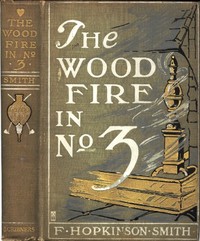
The Wood Fire in No. 3 — Inside the Classic can be approached with a clearer sense of reading commitment from its source measurements: 52,451 words, 3 hr 49 min estimated reading time, and 5 detected text sections.
The text analysis averages about 18.2 words per sentence, while the detected sections provide another way to judge how the source is divided.
Project Gutenberg metadata also associates the work with “Short stories, American,” connecting these edition facts with the source record’s subject description.
Explore this collection
These alternatives are selected using recorded categories and estimated reading time.
About 241 minutes
Adventure Picaresque Fiction
55,261 recorded words. 12 minutes difference from this book's estimate.
View Gutenberg source #35424About 198 minutes
Adventure Picaresque Fiction
45,416 recorded words. 31 minutes difference from this book's estimate.
View Gutenberg source #34849About 299 minutes
Adventure Picaresque Fiction
68,659 recorded words. 70 minutes difference from this book's estimate.
View Gutenberg source #35254Search stored excerpts and compare books → Choose by your preferences →
Choices use stored catalog measurements. Estimates vary with reading speed. A shared category is a catalog label, not a claim that two books have the same argument or literary quality.
Search reads excerpt text stored with this catalog and links to its associated Gutenberg record. The connection is stored in the site database; this tool does not recheck that every excerpt is word-for-word identical to that external record. Excerpt search does not cover every chapter and does not verify historical publication dates.
Catalog snapshot checked: 2026-09-26. Coverage: 91 public books, 91 available source excerpts.
Calculated from edition completeness, EPUB availability, text structure and catalogue metadata. Not a user rating.
Total of 100 points, scaled to a 2.5-5.0 range. Editions with an empty description or a missing EPUB file are not scored.
Public-domain source text
The source text is kept in the dedicated reader, separate from this catalogue record and its commentary.
The wood fire in No. 3 is not merely a source of warmth—it is the focal point around which a circle of friends spins tales. The opening pages establish the room as a sanctuary: an artist's studio retrofitted with a chimney that defies practical obstacles, where the hearth becomes a shrine. The narrator, addressing readers directly as “you who love an easy chair, a mug, a pipe, and a story,” sets an intimate, club-like tone. But the cozy frame quickly gives way to narratives of peril: a lost opal, a footpad in Constantinople, a ghostly murder. The tension between the safe, crackling fire and the violent, far-flung adventures it frames is the book's defining structural pattern.
The physical details of No. 3 are rendered with unusual specificity. MacWhirter “would have an open fire” despite the absence of a chimney; his friend Lonnegan, a Beaux Arts architect, solves the problem by building a flue from the basement up. The fire itself is described as “blazing logs” and “cheery crackle of hickory logs,” and the room is furnished with an easy chair, a mug, and a pipe. These objects are not mere props—they are invoked in the book's opening “Word of Welcome” as essential to the storytelling ritual. The fire is the constant that anchors each tale, and the men's physical positions around it (Mac “had the floor this afternoon”) suggest a theatrical arrangement: the hearth as stage, the listeners as audience. This setting recurs in the table of contents, which tracks the fire's decline: “Around the Embers of the Dying Fire” is the final section.
The stories within the frame are delivered orally, and the text records the listeners' responses. When Boggs tells his tale of being chased by four men in Constantinople, the room grows “almost breathless except for the tones of his voice.” Lonnegan urges him on: “Go on, Boggs, don't stop!” After the shocking punchline—that Boggs died and has been a ghost ever since—the listeners “glared at Boggs” before erupting in laughter. These reactions are part of the narrative; they show how the tales are performed and received. The frame narrator also notes Boggs's physical state: “mopping his face with his handkerchief,” his voice affecting “real dramatic power.” This attention to the teller's demeanor suggests that the book is as much about the art of storytelling as about the stories themselves.
The most striking pattern in the excerpts is the juxtaposition of the secure, warm studio with the violent, exotic settings of the tales. Boggs's story of the footpad attack is set in a “pool” and a “staircase” in Constantinople, where he is pursued by “rough looking brutes, bareheaded and frowzy.” The description is visceral: “the knife went straight through my own heart, and I fell dead at his feet.” Yet this horror is delivered to an audience of friends around a fire, and the tale ends with laughter. The same contrast appears in the table of contents: “A Dangerous Footpad” and “A Tale of Blood” sit alongside the cozy “Gentle Art of Dining.” The book repeatedly invites the reader to experience vicarious peril from a position of absolute safety—a dynamic that the frame narrator explicitly acknowledges by addressing those who love “a well-swept hearth.”
Readers should note that the excerpts provide only the opening frame and one complete tale (Boggs's ghost story). The remaining seven sections—including the lost opal, the girl in a steamer chair, and MacWhirter's views on dogs and gentlemen—are not represented here. The book's structure suggests that each tale will be delivered by a different member of the circle, and that the fire's gradual dying will mark the evening's end. Pay attention to how each storyteller's voice differs, and whether the frame narrative advances as the logs burn down.
There’s something about that makeshift fireplace in No. 3 that stays with me—how a circle of friends can make even a New York studio feel like a refuge. I found myself thinking of it again while revisiting The Westerners — A Closer Reading, where the same quiet ache of distance runs through every page. It’s funny how warmth and longing keep showing up together.
Build a private reading journal entry for this title.