About 229 minutes
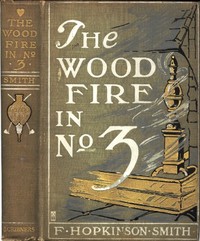
The Wood Fire in No. 3 — Inside the Classic
Adventure Picaresque Fiction
52,451 recorded words. 31 minutes difference from this book's estimate.
View Gutenberg source #34284

Before opening The Rival Crusoes; Or, The Ship Wreck Also A Voyage to Norway; and The Fisherman's Cottage. — A Closer Reading, the edition data offers a quick orientation: 45,416 words, 3 hr 18 min estimated reading time, and 4 detected text sections.
The text analysis averages about 30.0 words per sentence, while the detected sections provide another way to judge how the source is divided.
Project Gutenberg metadata also associates the work with “Fiction,” connecting these edition facts with the source record’s subject description.
Explore this collection
These alternatives are selected using recorded categories and estimated reading time.
About 229 minutes
Adventure Picaresque Fiction
52,451 recorded words. 31 minutes difference from this book's estimate.
View Gutenberg source #34284About 241 minutes
Adventure Picaresque Fiction
55,261 recorded words. 43 minutes difference from this book's estimate.
View Gutenberg source #35424About 299 minutes
Adventure Picaresque Fiction
68,659 recorded words. 101 minutes difference from this book's estimate.
View Gutenberg source #35254Search stored excerpts and compare books → Choose by your preferences →
Choices use stored catalog measurements. Estimates vary with reading speed. A shared category is a catalog label, not a claim that two books have the same argument or literary quality.
Search reads excerpt text stored with this catalog and links to its associated Gutenberg record. The connection is stored in the site database; this tool does not recheck that every excerpt is word-for-word identical to that external record. Excerpt search does not cover every chapter and does not verify historical publication dates.
Catalog snapshot checked: 2026-09-26. Coverage: 91 public books, 91 available source excerpts.
Calculated from edition completeness, EPUB availability, text structure and catalogue metadata. Not a user rating.
Total of 100 points, scaled to a 2.5-5.0 range. Editions with an empty description or a missing EPUB file are not scored.
Public-domain source text
The source text is kept in the dedicated reader, separate from this catalogue record and its commentary.
The opening pages of The Rival Crusoes plunge into a violent quarrel: Lord Robert Summers, bleeding from a face contusion, storms into his estate after a failed attempt to horsewhip Philip Harley, a local youth who has trespassed in the park. The grooms' gossip reveals a pattern of domineering behavior—Lord Robert cuffed a servant for accidentally stepping on his dog's toe—and a simmering class resentment that sets the stage for the island ordeal to come. Strickland wastes no time establishing the central tension: a nobleman accustomed to absolute authority and a rustic who refuses to be cowed.
The desert island does not erase social hierarchy; it renegotiates it. When Lord Robert and Philip Harley are marooned together, the initial dynamic is one of forced cooperation, but the language of deference persists. Philip addresses his companion as “your Lordship” even after they have built a shared hut and divided labor. Lord Robert, for his part, begins to notice that he receives “more real deference” and “marks of delicate attention” from Philip on the island than he ever commanded from servants at home. Strickland uses the isolated setting to test whether respect can be earned rather than demanded.
The turning point comes when a sail appears. Philip's melancholy reaction—he fears rescue will mean permanent separation—prompts Lord Robert to drop formal address and call him “my dear fellow.” The shift is small but significant: the noble youth initiates a friendship that crosses class lines, though he still assumes the power to “find a way to satisfy the most precise on the article of etiquette.” The island has changed their relationship, but the outside world's rules loom.
Strickland differentiates the two protagonists through distinct speech patterns. Lord Robert's dialogue is imperious and quick to anger: “George! Harry!—lazy fellows that you are!—Why are you not in attendance?” he shouts, even before explaining his injury. His sentences are full of exclamations and commands. Philip, by contrast, speaks in measured, often sorrowful tones. When Lord Robert joyfully announces the ship, Philip replies, “Is that all?” and later speaks of his own “insignificance” with a gravity that surprises his companion.
The grooms' exchange in the opening scene provides a third perspective: they call Lord Robert a “young tyrant” and express satisfaction that Philip “has given him a dressing.” This choral voice establishes that the lord's behavior is widely resented, and that Philip's defiance is seen as justified. Strickland thus builds sympathy for the lower-class boy before the shipwreck even occurs, complicating any simple reading of the island as a leveling space.
Strickland embeds class tension in physical objects and gestures. Lord Robert's handkerchief, stained with blood, is the first image of the story—a token of his defeat. Later, he hoists that same handkerchief as a distress signal on a cross, transforming a symbol of personal humiliation into a plea for rescue. The cross itself, which he carves with the date of their arrival, becomes a monument to their shared ordeal, but also a marker of his impulse to leave a record of his own actions.
Philip's farewell to the hut—he “bade a mournful adieu”—contrasts sharply with Lord Robert's eagerness to engrave and depart. For the rustic youth, the island has been a place of happiness and equality; for the lord, it has been a lesson in humility. These divergent responses to the same landscape underscore the novel's central question: can two people from different ranks ever truly be friends once society's structures are restored?
Readers should attend to the way Strickland uses the island not as a simple adventure backdrop but as a pressure chamber for social roles. The excerpts leave unresolved how Lord Robert's promised “way to satisfy the most precise on the article of etiquette” will work in practice. The two additional tales bundled in this volume—A Voyage to Norway and The Fisherman's Cottage—may extend or complicate these themes of isolation, rank, and survival.
Reading about the young lord and the sturdy rustic dropping their rank on that barren shore, I found myself thinking of sleepless nights—how a stripped-away identity can leave the mind exposed to its own tides. There's a quiet kinship there, in how solitude forces us into a closer reading of ourselves. The Man Who Couldn't Sleep — Key Ideas to Explore lingered like that same restless echo.
Use these questions to collect your thoughts before moving on.