About 318 minutes
The Return of Tharn — Key Ideas to Explore
Adventure Picaresque Fiction
72,992 recorded words. 3 minutes difference from this book's estimate.
View Gutenberg source #33529

The Man from Archangel, and Other Tales of Adventure — A Reader’s Guide can be approached with a clearer sense of reading commitment from its source measurements: 72,333 words, 5 hr 15 min estimated reading time, and 6 detected text sections.
The text analysis averages about 15.9 words per sentence, while the detected sections provide another way to judge how the source is divided.
Project Gutenberg metadata also associates the work with “Physicians -- Fiction,” connecting these edition facts with the source record’s subject description.
Explore this collection
These alternatives are selected using recorded categories and estimated reading time.
About 318 minutes
Adventure Picaresque Fiction
72,992 recorded words. 3 minutes difference from this book's estimate.
View Gutenberg source #33529About 328 minutes
Adventure Picaresque Fiction
75,342 recorded words. 13 minutes difference from this book's estimate.
View Gutenberg source #33279About 331 minutes
Adventure Picaresque Fiction
76,004 recorded words. 16 minutes difference from this book's estimate.
View Gutenberg source #34664Search stored excerpts and compare books → Choose by your preferences →
Choices use stored catalog measurements. Estimates vary with reading speed. A shared category is a catalog label, not a claim that two books have the same argument or literary quality.
Search reads excerpt text stored with this catalog and links to its associated Gutenberg record. The connection is stored in the site database; this tool does not recheck that every excerpt is word-for-word identical to that external record. Excerpt search does not cover every chapter and does not verify historical publication dates.
Catalog snapshot checked: 2026-09-26. Coverage: 91 public books, 91 available source excerpts.
Calculated from edition completeness, EPUB availability, text structure and catalogue metadata. Not a user rating.
Total of 100 points, scaled to a 2.5-5.0 range. Editions with an empty description or a missing EPUB file are not scored.
Public-domain source text
The source text is kept in the dedicated reader, separate from this catalogue record and its commentary.
The collection opens with a panoramic view of the Mahdist uprising, where distant blue hills and violet mists conceal a 'land of blood and horror.' Doyle’s prose moves from sweeping historical forces to intimate physical details—a mutilated Egyptian, a Greek woman mad with thirst—before narrowing to the figure of Bimbashi Joyce, a British officer whose debut unfolds against a backdrop of armoured trains and sunset-stained horizons. This shift between the epic and the particular recurs throughout the volume, whether in the clinical precision of a surgeon’s narrative or the cramped quarters of a sealed room.
Doyle’s medical stories, grouped in the second half, employ a similar technique: a professor reduces romance to atomic attraction, while a patient’s ‘cephalalgia’ becomes a springboard for marital negotiation. The juxtaposition of adventure and diagnosis gives the book its distinctive rhythm.
The volume’s structure is itself a kind of journey. The first six tales, grouped under ‘Tales of Adventure,’ move from the Sudanese frontier to a motor-car race, a sealed room mystery, and the titular story of a man from Archangel. The second section, ‘Tales of Medical Life,’ shifts abruptly to domestic interiors, lecture halls, and operating theatres. Doyle does not bridge these worlds; he lets them collide. In ‘The Début of Bimbashi Joyce,’ the narrative eye sweeps over a decade of colonial history in a single paragraph—‘Ten years of lust in Khartoum, ten years of silent work in Cairo’—before settling on a single officer’s actions. By contrast, ‘A Physiologist’s Wife’ opens with a garden scene where a professor’s proposal is framed as a scientific problem, complete with references to ‘cephalalgia’ and ‘atavism.’ The same authorial voice that describes a sunset ‘like islands in a sea of blood’ also dissects a lover’s hesitation as ‘some little congestion of the medulla and pons.’
Certain images recur across both sections, binding the collection together. Blood appears not only in the battlefield’s ‘crimson’ mists but also in the medical tales as a clinical substance—the surgeon’s domain. Mist and haze obscure the horizon in the adventure stories, while in the medical tales, fog is replaced by the ‘calm, clear light’ of science. Machinery, too, is a persistent presence: an armoured train in the first story, a motor in ‘The Great Brown-Pericord Motor,’ and the human body treated as a machine in the medical dialogues. Professor Grey speaks of ‘attraction and repulsion’ as ‘primary forces,’ applying the language of physics to courtship. Doyle’s characters often move between these registers—the romantic and the mechanical—without resolving the tension.
Doyle’s dialogue frequently serves as a form of diagnosis, whether of a military situation or a personal relationship. In ‘The Début of Bimbashi Joyce,’ the clipped exchanges between officers convey strategy and tension. In the medical tales, conversation becomes a clinical instrument: Professor Grey’s proposal to Mrs. O’James is a recitation of facts—‘My father and mother had no sign of any morbid diathesis’—while her acceptance is marked by a ‘sharp, quick gesture which had in it something of abandon and recklessness.’ Doyle uses dialogue to expose character through verbal tics: the professor’s pedantic precision, Mrs. Esdaile’s effusive nature-worship (‘It is Nature’s lullaby’). The contrast between Grey’s ‘chlorophyll’ and her ‘rich greens’ encapsulates the collection’s central conflict between scientific and sentimental worldviews.
Doyle frequently cuts between settings without transition, a technique that heightens the sense of dislocation. In ‘The Surgeon of Gaster Fell,’ the narrative moves from a remote fell to a domestic interior; in ‘The Sealed Room,’ from a locked chamber to a courtroom. The most striking shift occurs between the two halves of the book: after six tales of desert warfare and exotic locales, the reader is dropped into a drawing-room where a professor debates the nature of love. This abrupt change is not softened by any framing device. Doyle seems to trust that the reader will adjust, and the effect is to make each world seem equally strange—the battlefield as clinical as the consulting room, the consulting room as fraught as the battlefield. The collection’s unity lies not in setting but in the author’s steady, observant gaze.
Throughout the adventure tales, Doyle’s narrator often adopts a detached, almost diagnostic tone. The description of the Mahdist uprising—‘a bank of crimson’ rising ‘like islands in a sea of blood’—is as precise as a surgeon’s report. Characters are introduced with physical and psychological inventories: Bimbashi Joyce’s competence is measured by his actions, not his words. In the medical stories, this gaze turns inward, examining the body’s frailties and the mind’s quirks with equal dispassion. The result is a collection where every tale, whether set in the Sudan or a suburban garden, is a kind of case study—of a campaign, a marriage, a disease, or a deception.
Readers moving through these fifteen stories will notice how Doyle’s prose tightens when describing physical action and loosens into irony during domestic scenes. The medical tales reward attention to the author’s use of technical jargon as a form of characterisation, while the adventure stories demand patience with historical references that are left unexplained. Neither section offers easy resolutions; instead, Doyle leaves his characters—and his readers—poised between the certainties of science and the unpredictability of human impulse.
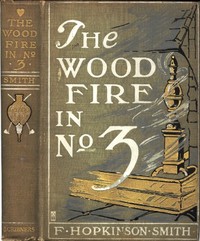
There’s something about Doyle’s willingness to let a good man drift into ruin that stays with you—how duty and detachment don’t always save us. I found the same quiet ache in The Wood Fire in No. 3 — Inside the Classic, where the warmth of the hearth barely hides the cold reversals waiting outside. It’s a familiar shadow, a comfortable sadness.
Capture what you thought, learned, and would like to remember.