About 372 minutes
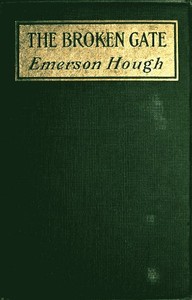
The Broken Gate: A Novel — Story, Setting & Ideas
Fantasy Juvenile Worlds
85,372 recorded words. 21 minutes difference from this book's estimate.
View Gutenberg source #33475

The Jews of Barnow: Stories — Background and Themes can be approached with a clearer sense of reading commitment from its source measurements: 80,579 words, 5 hr 51 min estimated reading time, and 7 detected text sections.
The text analysis averages about 18.1 words per sentence, while the detected sections provide another way to judge how the source is divided.
Project Gutenberg metadata also associates the work with “Jews -- Fiction,” connecting these edition facts with the source record’s subject description.
Explore this collection
These alternatives are selected using recorded categories and estimated reading time.
About 372 minutes
Fantasy Juvenile Worlds
85,372 recorded words. 21 minutes difference from this book's estimate.
View Gutenberg source #33475About 319 minutes
Fantasy Juvenile Worlds
73,360 recorded words. 32 minutes difference from this book's estimate.
View Gutenberg source #35304About 316 minutes
Fantasy Juvenile Worlds
72,549 recorded words. 35 minutes difference from this book's estimate.
View Gutenberg source #34281Search stored excerpts and compare books → Choose by your preferences →
Choices use stored catalog measurements. Estimates vary with reading speed. A shared category is a catalog label, not a claim that two books have the same argument or literary quality.
Search reads excerpt text stored with this catalog and links to its associated Gutenberg record. The connection is stored in the site database; this tool does not recheck that every excerpt is word-for-word identical to that external record. Excerpt search does not cover every chapter and does not verify historical publication dates.
Catalog snapshot checked: 2026-09-26. Coverage: 91 public books, 91 available source excerpts.
Calculated from edition completeness, EPUB availability, text structure and catalogue metadata. Not a user rating.
Total of 100 points, scaled to a 2.5-5.0 range. Editions with an empty description or a missing EPUB file are not scored.
Public-domain source text
The source text is kept in the dedicated reader, separate from this catalogue record and its commentary.
Karl Emil Franzos's The Jews of Barnow: Stories opens a window into the Jewish quarter of a Galician town through a translator's lens that preserves the cadence of Yiddish-inflected speech. The preface notes that the translator has kept visible the 'gabardine, caftan, love-locks' and the 'whine, the nasal twang' of the characters, signaling a deliberate effort to retain the texture of the original German. Franzos, likely Jewish himself according to contemporary reviewers, writes from within the community he depicts, lending his descriptions an insider's specificity.
Franzos's word choices carry the burden of social position and inner life. In the preface, the narrator describes the Jew's face as bearing 'the traces still of Israel's lordly age' alongside 'the scoff, the curse—his people's heritage.' This juxtaposition of nobility and persecution is not abstract; it is etched into physical description. When Miriam, the widow in the excerpt, speaks of a 'miracle,' she uses the term not as hyperbole but as a precise theological claim: God 'worked such a miracle for me' by sending a carriage at the right moment. The doctor's clinical language—'her skin is moist'—contrasts with her religious vocabulary, highlighting two frameworks for understanding the same event. Franzos does not let the reader forget that every utterance is a choice shaped by culture and circumstance.
The dialogue in the excerpts reveals hierarchies and unspoken rules. When the gravedigger's wife speaks to Miriam, she 'did not venture to reproach her,' indicating a deference born of Miriam's higher status or the wife's own marginal position. The gentleman's question—'What does it matter to us?'—dismisses the mystery of the carriage, while his wife blushes, a silent response that speaks volumes about gendered expectations. Later, the doctor's 'What a strange question!' registers surprise at Miriam's insistence, marking her as an outsider to medical rationality. Franzos uses these exchanges to map the social terrain of Barnow, where every word carries the weight of community judgment.
Franzos's descriptive passages often filter through a collective perspective. The schoolboys' nickname 'Esterka Regina'—a blend of the biblical Esther and the Latin for queen—reveals how the community romanticizes Rachel Welt from a distance. Her father, Hirsch, is 'a big burly man' disliked for his 'rough ways,' a description that serves both as character sketch and as explanation for the social distance between Rachel and the narrating students. The setting itself—'the small dwelling close to the Jewish slaughter-house'—anchors the story in the physical reality of the Jewish quarter. Franzos does not idealize; he places his characters in a world of butchers, cattle-dealers, and gravediggers, where the miraculous coexists with the mundane.
The excerpt from the story of Miriam and the sick child demonstrates Franzos's structural technique: he builds suspense through incremental revelation. The carriage arrives, the doctor examines, the child recovers—but the narrative focus shifts to Miriam's interpretation. She insists on a miracle, and the narrator reports that 'the people of Barnow' eventually agree, because 'a visible miracle wrought by God' overrides even the rabbi's decree. Franzos structures the episode to show how communal belief is negotiated: not through abstract theology but through concrete events and their retelling. The final line—'And what did the people of Barnow say?'—turns the story into a case study of how a community processes the extraordinary, using the same methodical pacing that characterizes the collection as a whole.
Readers approaching The Jews of Barnow should attend to the friction between individual voices and communal pressures. Franzos's stories reward attention to small gestures—a blush, a hesitation, a word repeated—that reveal the fault lines in this tightly knit world. The translation by M. W. Macdowall, while dated, retains enough of the original's rhythm to suggest the author's ear for speech. These are not folk tales but literary constructions that use the tools of realism to examine how a community tells stories about itself.
That old Galicia world, with its stubborn superstitions and fragile dignity, stayed with me long after I closed it. Something about the way quiet lives brace against change feels familiar. It reminded me of another story, one where dry country and hard choices press on people just as gently and just as relentlessly. When 'Bear Cat' Went Dry — Text and Context carries that same patient ache, I think. I found myself thinking of it often afterward.
Save your reaction, strongest insight, and memorable passage.