About 316 minutes
The Sheriff of Badger: A Tale of the Southwest Borderland — Story, Setting & Ideas
Fantasy Juvenile Worlds
72,549 recorded words. 3 minutes difference from this book's estimate.
View Gutenberg source #34281
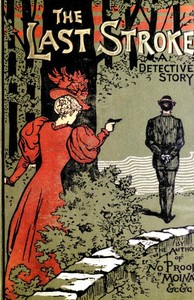
The catalog record for The Last Stroke: A Detective Story — Text and Context provides practical reading context through 73,360 words, 5 hr 19 min estimated reading time, and 8 detected text sections.
The text analysis averages about 16.4 words per sentence, while the detected sections provide another way to judge how the source is divided.
Project Gutenberg metadata also associates the work with “Fiction,” connecting these edition facts with the source record’s subject description.
Explore this collection
These alternatives are selected using recorded categories and estimated reading time.
About 316 minutes
Fantasy Juvenile Worlds
72,549 recorded words. 3 minutes difference from this book's estimate.
View Gutenberg source #34281About 297 minutes
Fantasy Juvenile Worlds
68,309 recorded words. 22 minutes difference from this book's estimate.
View Gutenberg source #36211About 289 minutes
Fantasy Juvenile Worlds
66,441 recorded words. 30 minutes difference from this book's estimate.
View Gutenberg source #33945Search stored excerpts and compare books → Choose by your preferences →
Choices use stored catalog measurements. Estimates vary with reading speed. A shared category is a catalog label, not a claim that two books have the same argument or literary quality.
Search reads excerpt text stored with this catalog and links to its associated Gutenberg record. The connection is stored in the site database; this tool does not recheck that every excerpt is word-for-word identical to that external record. Excerpt search does not cover every chapter and does not verify historical publication dates.
Catalog snapshot checked: 2026-09-26. Coverage: 91 public books, 91 available source excerpts.
Calculated from edition completeness, EPUB availability, text structure and catalogue metadata. Not a user rating.
Total of 100 points, scaled to a 2.5-5.0 range. Editions with an empty description or a missing EPUB file are not scored.
Public-domain source text
The source text is kept in the dedicated reader, separate from this catalogue record and its commentary.
The first chapter of The Last Stroke establishes Glenville as a quiet lakeside town, its schoolhouse isolated on a hill. The narrative voice lingers on the town's growth and the school's yellow paint, suggesting a deliberate, observant tone. A conversation between Elias Robbins and John Rote about naming the school "the 'cademy" hints at local color and the importance of community perception. This opening grounds the reader in a specific place and time, setting the stage for the mystery to come.
The excerpts reveal that the story unfolds gradually, with the detective Ferrars appearing only after several chapters. The early focus is on the town and its inhabitants, particularly through the schoolteacher Hilda and the simple-minded Peter. Peter's account of a ghost—"Only head and arms—ugh!"—is treated seriously by Ferrars, who believes it may be connected to Charles Brierly's murder. This moment, in the middle of the text, shifts the narrative from everyday life to active investigation. The reader is drawn into the mystery alongside the characters, with Ferrars' careful questioning and his request to see the location underscoring his methodical approach.
Ferrars' letter to Hilda reveals his strategy: he plans to "look a little more closely to the other end of my line" and asks her to inform him if Mrs. J—— leaves town. This indicates a network of informants and a focus on movements and motives. The excerpts show Ferrars as a calm, persuasive figure—he coaxes Peter to show him the ghost site by promising to drive away spirits. His reliance on observation and trust-building contrasts with the townspeople's skepticism. The reader learns about the case through these interactions, not through exposition, making the detective's thought process a central puzzle.
By Chapter XV, the relationship between Ferrars and Robert Brierly has deepened into friendship, despite the underlying suspicion that Brierly may be involved in his brother's death. The description of Ferrars' "almost haggard look" suggests the case weighs on him. Hilda's role as a confidante and intermediary is clear: she reports Peter's story, receives Ferrars' letter, and is trusted with sensitive information. The excerpts hint at romantic tension—Ferrars takes her hand and speaks gravely—but the primary focus remains on the investigation. These personal dynamics add depth without distracting from the mystery.
Glenville is more than a backdrop; its geography shapes the plot. The schoolhouse's isolation, the lake shore, the "Indian Mound," and the belt of trees are all described with care. The ghost appears in a thicket of brushwood, a location Ferrars is eager to examine. The town's growth from hamlet to summer resort is noted, implying changes in population and perhaps in crime. The setting's tranquility contrasts with the violent death, creating a tension that the excerpts maintain. Readers attentive to place will find clues in the landscape itself.
These excerpts suggest that The Last Stroke rewards patient reading. The mystery unfolds through small details—a boy's fear, a detective's letter, a town's layout—rather than dramatic revelations. Pay attention to what characters notice and what they omit, as the narrative often withholds information until later chapters. The gradual pace and focus on observation make this a detective story that invites the reader to piece together the clues alongside Ferrars.
Reading how The Last Stroke lets its detective emerge slowly, through rooms and half-spoken clues, I remembered sitting on a worn porch, turning pages of The Undying Past — Inside the Classic, where time itself felt like a suspect. Both books taught me that the truest mysteries aren't solved quickly—they unfold, like a familiar face gradually revealing its age.
Use these questions to collect your thoughts before moving on.