About 372 minutes
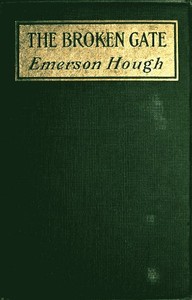
The Broken Gate: A Novel — Story, Setting & Ideas
Fantasy Juvenile Worlds
85,372 recorded words. 22 minutes difference from this book's estimate.
View Gutenberg source #33475
For The Comstock Club — Themes and Context, the stored edition analysis reports 90,456 words, 6 hr 34 min estimated reading time, and 8 detected text sections.
The text analysis averages about 20.1 words per sentence, while the detected sections provide another way to judge how the source is divided.
Project Gutenberg metadata also associates the work with “Miners -- Fiction,” connecting these edition facts with the source record’s subject description.
Explore this collection
These alternatives are selected using recorded categories and estimated reading time.
About 372 minutes
Fantasy Juvenile Worlds
85,372 recorded words. 22 minutes difference from this book's estimate.
View Gutenberg source #33475About 420 minutes
Fantasy Juvenile Worlds
96,558 recorded words. 26 minutes difference from this book's estimate.
View Gutenberg source #33789About 351 minutes
Fantasy Juvenile Worlds
80,579 recorded words. 43 minutes difference from this book's estimate.
View Gutenberg source #34617Search stored excerpts and compare books → Choose by your preferences →
Choices use stored catalog measurements. Estimates vary with reading speed. A shared category is a catalog label, not a claim that two books have the same argument or literary quality.
Search reads excerpt text stored with this catalog and links to its associated Gutenberg record. The connection is stored in the site database; this tool does not recheck that every excerpt is word-for-word identical to that external record. Excerpt search does not cover every chapter and does not verify historical publication dates.
Catalog snapshot checked: 2026-09-26. Coverage: 91 public books, 91 available source excerpts.
Calculated from edition completeness, EPUB availability, text structure and catalogue metadata. Not a user rating.
Total of 100 points, scaled to a 2.5-5.0 range. Editions with an empty description or a missing EPUB file are not scored.
Public-domain source text
The source text is kept in the dedicated reader, separate from this catalogue record and its commentary.
The Comstock Club opens not with a plot but with a voice: a long, rhythmic tribute to the pioneer as a soldier of peace who assaults the wilderness without fanfare. The prose is oratorical, built on parallel clauses and a solemn cadence that frames the miner as a figure of self-contained endurance. This is not a neutral description—it is a deliberate elevation of the mining life into something heroic and elegiac. The dedication to the miners of the Pacific Coast, written while the author worked among them, signals that the book is both a product of and a tribute to that world.
The excerpts reveal a world where legality and morality are not identical. In one anecdote, a professional gambler uses fixed cards to break a bank, but the miners force him to return the money—not because cheating is wrong, but because he is an outsider from New York. When the cards are then fixed by the miners themselves, the transaction becomes legitimate according to their code. The narrator notes the “nice distinctions” in the gamblers’ code of honor, a phrase that captures the book’s interest in moral nuance.
Another story features a judge who sells stock in his mining claims to both parties in a lawsuit before ruling in favor of the plaintiff. The defendant’s superintendent calls him a thief, but the judge later delivers a dividend and a buyout that enriches both men. The judge’s actions are corrupt by conventional standards, yet the outcome rewards everyone. The book does not condemn him; it presents the episode as a demonstration of frontier pragmatism.
The opening chapter’s extended metaphor—the pioneer as a soldier whose battles are fought against forest, desert, and malaria—establishes a central tension: the miner’s work is heroic yet invisible. The author writes that “not one in a thousand realizes the texture of the manhood that has been exhausting itself within him.” This phrase, with its tactile word “texture,” suggests that the book is concerned with the inner quality of the miner’s character, not just his actions.
The dedication reinforces this: the book is written “while working for and among them,” implying an insider’s perspective. The chapter titles—such as “Rough Royalty,” “Specimen Liars,” and “The Club Grows Poetical”—hint at a range of tones, from the rough to the lyrical. The club itself seems to be a framing device for a series of character sketches and moral tales, rather than a continuous narrative.
The catalog subjects place the book firmly in Virginia City and the Comstock Lode, but the excerpts offer little direct description of the physical setting. Instead, the setting emerges through the stories: the judge’s claims are “over on the east side,” the gambler’s bank is broken in a saloon, and the miners’ code is tested in real transactions. The place is defined by its economic activity—mining claims, stock shares, ore deposits—and by the social dynamics of a boomtown.
The author, C. C. Goodwin, was editor of the Salt Lake Daily Tribune, and his journalistic background may explain the book’s episodic, anecdotal structure. The chapter “Trouble with the Expense Account” suggests a comic vein, while “The Terrible Depths” and “The Dawn of Elysium” promise darker and more hopeful turns. The setting is not merely backdrop but the crucible in which the miners’ character is forged.
The Comstock Club is best approached as a collection of linked sketches rather than a novel with a single arc. Readers will find the most value in the moral puzzles and the distinctive voice of the narrator, who admires his subjects without sentimentalizing them. Pay attention to the chapter titles, which often signal the tone of the tale to follow, and to the recurring theme of honor—flexible, situational, but never absent.
Reading about the Comstock miners’ rough justice, I remembered my own grandfather’s poker table—where a straight face mattered more than a rulebook. That same code hums through Uncanny Tales — Background and Themes, where truth bends around spoken shadows. Both books feel like warm lantern light on a cold porch: not quite history, not quite fiction, just the quiet weight of a story told slowly, after dark.
A brief reflection can help important ideas stay with you longer.