About 549 minutes
The High Heart — Edition Insights
Psychological Domestic Love Stories
126,180 recorded words. 27 minutes difference from this book's estimate.
View Gutenberg source #35463
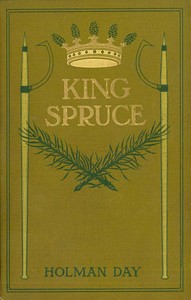
The catalog record for King Spruce, A Novel — Edition Insights provides practical reading context through 119,993 words, 8 hr 42 min estimated reading time, and 14 detected text sections.
The text analysis averages about 15.8 words per sentence, while the detected sections provide another way to judge how the source is divided.
Project Gutenberg metadata also associates the work with “Maine -- Fiction,” connecting these edition facts with the source record’s subject description.
Explore this collection
These alternatives are selected using recorded categories and estimated reading time.
About 549 minutes
Psychological Domestic Love Stories
126,180 recorded words. 27 minutes difference from this book's estimate.
View Gutenberg source #35463About 485 minutes
Psychological Domestic Love Stories
111,472 recorded words. 37 minutes difference from this book's estimate.
View Gutenberg source #34537About 560 minutes
Psychological Domestic Love Stories
128,588 recorded words. 38 minutes difference from this book's estimate.
View Gutenberg source #36112Search stored excerpts and compare books → Choose by your preferences →
Choices use stored catalog measurements. Estimates vary with reading speed. A shared category is a catalog label, not a claim that two books have the same argument or literary quality.
Search reads excerpt text stored with this catalog and links to its associated Gutenberg record. The connection is stored in the site database; this tool does not recheck that every excerpt is word-for-word identical to that external record. Excerpt search does not cover every chapter and does not verify historical publication dates.
Catalog snapshot checked: 2026-09-26. Coverage: 91 public books, 91 available source excerpts.
Calculated from edition completeness, EPUB availability, text structure and catalogue metadata. Not a user rating.
Total of 100 points, scaled to a 2.5-5.0 range. Editions with an empty description or a missing EPUB file are not scored.
Public-domain source text
The source text is kept in the dedicated reader, separate from this catalogue record and its commentary.
Holman Day's King Spruce opens not with a romance but with a technical note on log driving—sluicing logs through dams, the strategic value of water rights, and the explosive work of breaking jams. This industrial framing sets the stage for a story where the timber trade's machinery and money dictate human relationships. The novel's catalog subjects—Maine fiction, love stories, lumber trade—suggest a conventional romance, but the excerpts reveal a darker bargain: a wealthy lumberman, Pulaski D. Britt, and a banker, John Barrett, propose that woods boss Colin MacLeod marry a young woman of unknown parentage, promising him $10,000 if he does. The woman herself is absent from the negotiation; she is an asset to be transferred, her inheritance a tool of control.
The central scene in the excerpts is not a lovers' meeting but a backroom deal. Britt and Barrett summon MacLeod to a private conversation, where Britt reveals that the girl—never named in this passage—has $10,000 coming to her from her family. She does not know it. She was, Britt claims, stolen from good folks. The money, he insists, needs a man to manage it. The proposal is blunt: marry her, and the cash goes into MacLeod's fist the day the knot is tied.
MacLeod's response is immediate suspicion. He calls the story "ratty" and asks pointed questions: "Has she got any name comin'? Has she got any folks comin'? Has she got anything comin' except somebody's hush-money?" His resistance is not moral outrage at the scheme's dishonesty toward the woman, but a woodsman's instinct for a snide deal. The language of the negotiation—"joinin' this matrimonial agency," "cheaper," "hush-money"—frames marriage as a commercial contract, not a romantic union.
Day's dialogue marks class and region sharply. Britt roars and blusters, using oaths and threats. MacLeod speaks in a clipped, stubborn vernacular: "It sounds snide and I won't do it." The drunken Tommy Eye, eavesdropping under a bunk, offers to marry the heiress "ch-cheaper" and is cuffed repeatedly without whimpering. His submission—"'Spected kickin'. Jus' soon be cuffed"—reveals a brutal hierarchy where violence is routine and the powerless accept it.
The setting itself reinforces this world. The conversation happens in a camp bunkhouse, with pine-needle carpets and a stove. MacLeod tosses Tommy out "with as little consideration as though he were a bag of oats." The physicality of the scene—the smashing of a bottle, the dragging of a drunk—grounds the plot in the material conditions of lumbering, where men are handled like cargo.
The Project Gutenberg record lists King Spruce under "Love stories" and "Psychological, Domestic & Love Stories." Yet the excerpts contain no romantic dialogue, no courtship, no interior reflection from the woman at the center of the plot. The love story, if it exists, is entirely absent from the passages provided. Instead, the novel's psychological interest appears to lie in MacLeod's dilemma: will he accept a mercenary marriage? The catalog's secondary topic, "romance-fiction," may mislead readers expecting a conventional love plot.
Similarly, the subject "Maine -- Fiction" is accurate but reductive. The excerpts show a specific, technical Maine—not postcard scenery but working landscapes of dams, log drives, and camp politics. The note on sluicing and the mention of "Jerusalem" as a river with a series of dams indicate that the novel's setting is not generic but precisely engineered for conflict over water rights and timber control.
Readers approaching King Spruce as a romance should adjust expectations: the excerpts suggest a story more concerned with economic coercion and masculine codes than with emotional intimacy. The woman whose marriage is being arranged remains a silent figure, known only through others' claims about her inheritance and her past. Pay attention to how Day handles her eventual appearance—whether she gains a voice or remains an object of transaction. The novel's title, King Spruce, may point not to a person but to the timber itself, the true sovereign of this world.
Sometimes a book lingers like a campfire’s last glow. King Spruce left me thinking about quiet ceremonies—the unspoken rituals of honor among rough men. That thread carried me to The Master of the Ceremonies — Context and Discussion, where formal pageantry masks similar, older tensions. Both feel like watching someone bow to rules they never chose, and I keep pondering that weight.
A brief reflection can help important ideas stay with you longer.