About 270 minutes
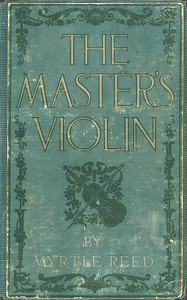
The Master's Violin — Reading Notes
Psychological Domestic Love Stories
62,100 recorded words. 1 minutes difference from this book's estimate.
View Gutenberg source #33601

This digital edition of The Wish: A Novel — Story, Setting & Ideas is described by source-level measurements including 62,320 words, 4 hr 31 min estimated reading time, and 7 detected text sections.
The text analysis averages about 18.2 words per sentence, while the detected sections provide another way to judge how the source is divided.
Project Gutenberg metadata also associates the work with “Sisters -- Fiction,” connecting these edition facts with the source record’s subject description.
Explore this collection
These alternatives are selected using recorded categories and estimated reading time.
About 270 minutes
Psychological Domestic Love Stories
62,100 recorded words. 1 minutes difference from this book's estimate.
View Gutenberg source #33601About 280 minutes
Psychological Domestic Love Stories
64,263 recorded words. 9 minutes difference from this book's estimate.
View Gutenberg source #35012About 298 minutes
Psychological Domestic Love Stories
68,504 recorded words. 27 minutes difference from this book's estimate.
View Gutenberg source #34619Search stored excerpts and compare books → Choose by your preferences →
Choices use stored catalog measurements. Estimates vary with reading speed. A shared category is a catalog label, not a claim that two books have the same argument or literary quality.
Search reads excerpt text stored with this catalog and links to its associated Gutenberg record. The connection is stored in the site database; this tool does not recheck that every excerpt is word-for-word identical to that external record. Excerpt search does not cover every chapter and does not verify historical publication dates.
Catalog snapshot checked: 2026-09-26. Coverage: 91 public books, 91 available source excerpts.
Calculated from edition completeness, EPUB availability, text structure and catalogue metadata. Not a user rating.
Total of 100 points, scaled to a 2.5-5.0 range. Editions with an empty description or a missing EPUB file are not scored.
Public-domain source text
The source text is kept in the dedicated reader, separate from this catalogue record and its commentary.
The novel opens with a younger sister recounting how she insinuated herself into the role of go-between for her older sister Martha and Martha's lover, Robert. The narrator describes her method: under the pretext of discussing Martha, she learns to "prattle away the cares that filled his heart" in a manner she deems childish and foolish, as men prefer, yet also serious and knowing beyond her years. This early passage establishes a voice that is both self-deprecating and shrewd, aware of the performance required to maintain her position as confidante.
The narrative quickly moves from this psychological portrait to a specific seasonal crisis. As autumn approaches, Martha grows restless—pacing, staying at open windows, gesticulating, and startling when caught. The narrator, then seventeen, interprets this as overwrought expectation and writes to Robert, who confesses his debts and inability to return. The father's angry reaction and Martha's subsequent decline into listlessness, weight loss, and weeping shift the household dynamics, with the narrator seizing control of domestic management.
The narrator's position evolves from a child excluded from serious discussions to the de facto head of the household. She describes taking "the burden of housekeeping upon my shoulders" and, within a fortnight, making "the entire household dance to my pipe." This assertion of authority is met with smiles and remonstrance, but she persists, even as Martha declares she will never suffer the younger sister to usurp her place. The power struggle is subtle: Martha eventually feels grateful but dismisses the narrator's influence by saying "one must give way to children." The narrator's self-awareness is evident in her reflection that she "learnt for the first that one may t..." (the excerpt cuts off), suggesting a dawning recognition of the complexities of love and manipulation.
The text is punctuated by physical and emotional symptoms that mirror the sisters' inner states. Martha's restlessness is described through specific actions: "excited steps," "half the nights at the open window," and being "violently startled" when caught. Her decline is marked by "despairing listlessness," deep blue rings around her eyes, and an "odour of valerian" from her mouth—a medicinal smell that suggests chronic distress. The narrator herself becomes attuned to these signs, interpreting them as proof of her own shrewdness. The domestic setting, with its chimney-corner and phlegmatic mother, contrasts with the sisters' volatile emotions, creating a tension between stillness and agitation.
The narrative is built on a series of letters and reported conversations that create a layered structure of confession and surveillance. The narrator writes to Robert, receives his contrite replies, and then reports Martha's reactions. She also observes Martha secretly, noting when she "thought herself alone" and when she was "caught in the act." This triangular communication—narrator to Robert, Robert to narrator, narrator to Martha—generates a claustrophobic intimacy. The father's intervention, bringing a letter that the narrator is "not allowed to read," underscores the limits of her knowledge. Yet she continues to piece together the story from fragments, positioning herself as both participant and observer.
The excerpts shift between interior spaces and the natural world, though the latter is only glimpsed. The narrator's early description of her role as a "singing-bird" whose chatter is tolerated suggests a confined, performative existence. Martha's restlessness drives her to the window, a threshold between the house and the outside. The father brings the bad-news letter in a "bad humour," and the mother remains in her "chimney-corner," immobile. These spatial details—the window, the corner, the threshold—map the characters' emotional states. The narrator's takeover of housekeeping is a territorial move, claiming the domestic sphere as her own. The movement is not physical but psychological, as the sisters orbit around Robert's absence.
Readers attentive to the narrator's voice will notice her careful self-presentation: she admits to cunning and childishness while asserting her maturity. The incomplete excerpts leave open how her role evolves and whether her influence proves lasting. Pay particular attention to the moments when she claims to act for Martha's sake—these may reveal as much about her own desires as about her sister's. The novel's structure, built on letters and reported speech, rewards close reading of who speaks, who listens, and who is left in the dark.
Reading how the younger sister in The Wish quietly absorbs Martha’s chaos, I remembered being the listener in my own family’s tangled affections. That same hush—of watching someone choose poorly and feeling helpless—came back when I first opened The Setons — Text and Context. Its gentle domestic gravity felt familiar, like sitting on a porch while rain settled everything.
A brief reflection can help important ideas stay with you longer.