About 271 minutes
The Wish: A Novel — Story, Setting & Ideas
Psychological Domestic Love Stories
62,320 recorded words. 1 minutes difference from this book's estimate.
View Gutenberg source #33886
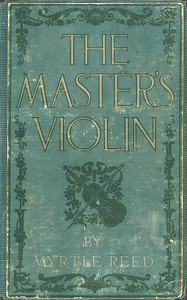
The source record for The Master's Violin — Reading Notes measures this digital text at 62,100 words, 4 hr 30 min estimated reading time, and 7 detected text sections.
The text analysis averages about 14.7 words per sentence, while the detected sections provide another way to judge how the source is divided.
Project Gutenberg metadata also associates the work with “Love stories,” connecting these edition facts with the source record’s subject description.
Explore this collection
These alternatives are selected using recorded categories and estimated reading time.
About 271 minutes
Psychological Domestic Love Stories
62,320 recorded words. 1 minutes difference from this book's estimate.
View Gutenberg source #33886About 280 minutes
Psychological Domestic Love Stories
64,263 recorded words. 10 minutes difference from this book's estimate.
View Gutenberg source #35012About 298 minutes
Psychological Domestic Love Stories
68,504 recorded words. 28 minutes difference from this book's estimate.
View Gutenberg source #34619Search stored excerpts and compare books → Choose by your preferences →
Choices use stored catalog measurements. Estimates vary with reading speed. A shared category is a catalog label, not a claim that two books have the same argument or literary quality.
Search reads excerpt text stored with this catalog and links to its associated Gutenberg record. The connection is stored in the site database; this tool does not recheck that every excerpt is word-for-word identical to that external record. Excerpt search does not cover every chapter and does not verify historical publication dates.
Catalog snapshot checked: 2026-09-26. Coverage: 91 public books, 91 available source excerpts.
Calculated from edition completeness, EPUB availability, text structure and catalogue metadata. Not a user rating.
Total of 100 points, scaled to a 2.5-5.0 range. Editions with an empty description or a missing EPUB file are not scored.
Public-domain source text
The source text is kept in the dedicated reader, separate from this catalogue record and its commentary.
The Master's Violin opens not with its title character but with a firelit room where an elderly woman, Miss Peace Field, sits in her easy chair, watched by three companions. The narrative lingers on the flames, which 'give back its memories—blue skies, grey days just tinged with gold, lost rainbows, and flashes of sun.' This extended metaphor of a tree's final hour sets a contemplative tone that pervades the early chapters. Peace, at seventy-five, is described as having woven 'the blessed fabric of Content' from life's threads—a phrase that signals Reed's interest in domestic philosophy.
When Peace dies, her nephew Lynn arrives late for a violin lesson, announcing the death with awkward detachment: 'It upsets things.' The Master, a violin maker, immediately challenges Lynn's emotional emptiness, forcing him to play an adagio 'full of one heartache' while his aunt lies dead. This confrontation between technical skill and genuine feeling becomes the novel's central tension.
Reed invests the domestic setting with symbolic weight. The opening scene's fire is not mere atmosphere but a character in itself: 'Tints of amethyst and sapphire appeared in the haze from the backlog and were lost a moment later in the dominant flame.' The narrative explicitly reads the fire as a tree returning its memories, a conceit that extends to Peace's hands, which the light transforms into 'carved ivory.' This attention to material detail—mahogany surfaces, old silver, embroidered silk stockings—creates a world where objects carry emotional resonance. Peace herself is defined by her ability to weave 'Content' from life's threads, a metaphor that aligns domestic craft with spiritual equilibrium. The house, after her death, seems 'alive, in pitiful contrast to its mistress,' suggesting that the setting itself participates in the emotional drama.
The Master's critique of Lynn's playing is the novel's most pointed scene. When Lynn plays G natural instead of G sharp, the Master does not correct technique but character: 'if you have no talents for composition, why do you not let the composer of your concerto have his own way?' The error becomes a symptom of Lynn's emotional shallowness. The Master's sarcastic suggestion that Lynn take up a 'parlour organ' with pre-made notes underscores his view that music without feeling is mere mechanism. Lynn plays the adagio 'correctly, and with intelligence, but without feeling,' and the Master cannot comprehend how a man with a dead aunt can play 'like one machine.' This scene establishes music as the novel's primary ethical language, where technical fidelity without emotional truth is a moral failing.
Lynn's reaction to his aunt's death is strikingly cold. He tells the Master, 'She was very old, you know—more than seventy-five. There is a great deal of fuss made about such things.' The narrative notes that Lynn is 'unconscious and perfectly sincere' in his detachment. This emotional flatness is contrasted with the Doctor's internal turmoil, who wonders 'why the very floors did not cry out in protest' at death's presence. The house itself seems to mourn, while Lynn remains untouched. The Master's final question—how can one play a heartbroken adagio without feeling?—remains unanswered, but the novel's early chapters suggest that Lynn's journey will involve learning to connect technique with emotion. The excerpts do not reveal whether he succeeds.
Readers should attend to how Reed uses material objects—the violin, the fire, the house—as extensions of inner states. The catalog subjects list 'villages' and 'violinists,' but the excerpts show a story more concerned with emotional education than with romance or pastoral charm. Lynn's detachment is the puzzle the novel sets up; whether the Master's harsh pedagogy or the village's influence can change him is the question the full text must answer.
That rainy afternoon, I kept returning to the Master’s aching silence after Peace’s death, how grief found its voice only through his violin. It made me wonder about other quiet lives hiding louder stories. Later, almost by accident, I picked up The Delafield Affair — Inside the Classic and felt that same hush—the way a town’s secrets wait, patient as held breath, for someone to finally listen.
Capture what you thought, learned, and would like to remember.