About 383 minutes
I, Thou, and the Other One: A Love Story — Reading Notes
Psychological Domestic Love Stories
87,945 recorded words. 7 minutes difference from this book's estimate.
View Gutenberg source #34628
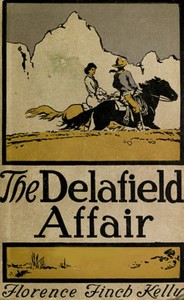
This digital edition of The Delafield Affair — Inside the Classic is described by source-level measurements including 89,667 words, 6 hr 30 min estimated reading time, and 9 detected text sections.
The text analysis averages about 18.2 words per sentence, while the detected sections provide another way to judge how the source is divided.
Project Gutenberg metadata also associates the work with “Western stories,” connecting these edition facts with the source record’s subject description.
Explore this collection
These alternatives are selected using recorded categories and estimated reading time.
About 383 minutes
Psychological Domestic Love Stories
87,945 recorded words. 7 minutes difference from this book's estimate.
View Gutenberg source #34628About 400 minutes
Psychological Domestic Love Stories
91,997 recorded words. 10 minutes difference from this book's estimate.
View Gutenberg source #34105About 407 minutes
Psychological Domestic Love Stories
93,444 recorded words. 17 minutes difference from this book's estimate.
View Gutenberg source #35358Search stored excerpts and compare books → Choose by your preferences →
Choices use stored catalog measurements. Estimates vary with reading speed. A shared category is a catalog label, not a claim that two books have the same argument or literary quality.
Search reads excerpt text stored with this catalog and links to its associated Gutenberg record. The connection is stored in the site database; this tool does not recheck that every excerpt is word-for-word identical to that external record. Excerpt search does not cover every chapter and does not verify historical publication dates.
Catalog snapshot checked: 2026-09-26. Coverage: 91 public books, 91 available source excerpts.
Calculated from edition completeness, EPUB availability, text structure and catalogue metadata. Not a user rating.
Total of 100 points, scaled to a 2.5-5.0 range. Editions with an empty description or a missing EPUB file are not scored.
Public-domain source text
The source text is kept in the dedicated reader, separate from this catalogue record and its commentary.
The novel opens with Curtis Conrad surveying a drought-stricken New Mexican plateau, noting cattle 'tramping miles for a drink of water' and predicting losses for the Castletons. This immediate focus on environmental hardship—alkali springs, heat haze, and dying stock—grounds the story in a specific, unforgiving landscape. The early chapters juxtapose Conrad's seasoned pragmatism with the naive enthusiasm of Pendleton, a tenderfoot who drinks from an alkali spring and later boasts of his resulting thirst. Their dynamic, set against the backdrop of a cattle drive and a midnight stampede, establishes a pattern of contrast between experience and inexperience that likely shapes the broader narrative.
The excerpts repeatedly foreground the physical environment as an active force. Conrad's first thoughts are of drought: 'It’s awful to see the poor brutes dropping in their tracks.' The alkali spring that Pendleton drinks from is described with precise consequence—'you’ll think you’re chewing cotton'—and the stampede occurs in a 'dry shallow valley' that becomes a 'blind alley of the hills.' These details are not mere backdrop; they drive plot and character response. The sand-storm illustrated in one plate ('Upon man and beast the sand-storm beat bitterly') suggests that weather events will escalate. The novel's structure, with chapters titled 'Battling the Elements' and 'The Heavens Open,' reinforces that nature is a central antagonist, testing both human endurance and moral resolve.
Dialogue in the excerpts reveals character through idiom and restraint. Conrad's speech is terse and practical: 'Don’t drink from that spring, Pendy. It’s alkali.' Pendleton's reply—'Everything goes!'—captures his breezy ignorance. The cowboys' names—Peters, Texas Bill, Red Jack, José Gonzalez—hint at a multicultural workforce, though the excerpts offer little of their perspectives. The narrative voice itself shifts between Conrad's interior thoughts ('Poor devils!') and objective action ('He called his foreman, seized his saddle'). This alternation creates a layered point of view, one that may expand as the 'Delafield affair' unfolds. The chapter titles—'Vengeance Avowed,' 'The Evil that Men do,' 'The Silent Duel'—promise a psychological dimension beneath the western action.
The text repeatedly sets opposing elements side by side: the tenderfoot versus the seasoned cowboy, the alkali spring's deceptive appearance versus its harmful effect, the 'blind alley' of the valley versus the open plain. Even Conrad's reverie about a 'maimed bird' introduces a note of vulnerability that contrasts with his competent exterior. The stampede scene highlights a tension between control and chaos: Conrad expects the herd to have traveled farther, but they haven't; he anticipates a need for sleep, but is roused by disaster. These structural oppositions—expectation versus reality, knowledge versus ignorance—suggest a narrative that will explore how characters navigate not only the physical frontier but also moral and emotional uncertainties.
Readers attentive to the early chapters will find a story that rewards close observation of setting and speech. The drought, the alkali spring, and the stampede are not isolated incidents but threads that likely weave into the larger 'affair' of the title. Pay particular attention to how characters' responses to the land—whether dismissive or respectful—foreshadow their roles in the conflicts to come.
That dusty, drought-ridden New Mexico in The Delafield Affair made me ache for somewhere softer, quieter—which is why I keep returning to the gentle landscape of Marriage — Inside the Classic. It’s the same longing, I suppose, just pointed inward. Funny how those old stories still whisper to us.
Capture what you thought, learned, and would like to remember.