About 310 minutes
Whispering Wires — A Reader’s Guide
Science Fiction Utopias
71,183 recorded words. 10 minutes difference from this book's estimate.
View Gutenberg source #34046
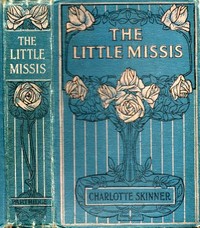
For The Little Missis — Themes and Context, the stored edition analysis reports 68,810 words, 5 hr estimated reading time, and 7 detected text sections.
The text analysis averages about 15.0 words per sentence, while the detected sections provide another way to judge how the source is divided.
Project Gutenberg metadata also associates the work with “Christian life -- Fiction,” connecting these edition facts with the source record’s subject description.
Explore this collection
These alternatives are selected using recorded categories and estimated reading time.
About 310 minutes
Science Fiction Utopias
71,183 recorded words. 10 minutes difference from this book's estimate.
View Gutenberg source #34046About 320 minutes
Science Fiction Utopias
73,442 recorded words. 20 minutes difference from this book's estimate.
View Gutenberg source #34250About 323 minutes
Science Fiction Utopias
74,184 recorded words. 23 minutes difference from this book's estimate.
View Gutenberg source #35195Search stored excerpts and compare books → Choose by your preferences →
Choices use stored catalog measurements. Estimates vary with reading speed. A shared category is a catalog label, not a claim that two books have the same argument or literary quality.
Search reads excerpt text stored with this catalog and links to its associated Gutenberg record. The connection is stored in the site database; this tool does not recheck that every excerpt is word-for-word identical to that external record. Excerpt search does not cover every chapter and does not verify historical publication dates.
Catalog snapshot checked: 2026-09-26. Coverage: 91 public books, 91 available source excerpts.
Calculated from edition completeness, EPUB availability, text structure and catalogue metadata. Not a user rating.
Total of 100 points, scaled to a 2.5-5.0 range. Editions with an empty description or a missing EPUB file are not scored.
Public-domain source text
The source text is kept in the dedicated reader, separate from this catalogue record and its commentary.
The novel opens with the rhythmic creak of a mangle, a weighted box-style ironing machine, as Phebe Waring visits the washerwoman Mrs. Colston. Their easy banter—Phebe teasingly claims to have fallen in love with Mrs. Colston—establishes a warm, domestic intimacy that contrasts sharply with the social hostility Phebe later faces. Skinner uses the mangle as a recurring sonic marker of labor and routine, a sound that punctuates the early chapters before giving way to the quieter, more painful rhythms of isolation.
The excerpts reveal a town where religious committees and Sunday schools police women’s reputations while ignoring their own hypocrisy. When Phebe proposes a mission to the poor, the all-male committee dismisses her as “not the kind of woman to do the Deborah act,” citing her husband’s abandonment and a rumored visit to a public house. The secretary’s amendment—a letter rejecting her offer—is carried with only three dissenters. Skinner shows how institutional power uses selective morality: the same men who refuse Phebe’s help later predict she will “commence the work herself,” then blame her for doing so. The gossip network spreads quickly: Phebe loses four weekly customers and receives cold nods from former acquaintances. The novel traces how a woman’s private misfortune becomes public currency, and how charitable work itself becomes a site of gendered conflict.
Phebe’s friend Stephen chooses silence to protect her, praying for restraint while others slander her. Skinner contrasts this controlled quiet with the committee’s voluble prejudice and the “echo” who reads a pre-written letter. Phebe herself moves from playful chatter with Mrs. Colston to a “dazed feeling” upon reading the committee’s rejection. Her three anxious questions—whether to show the letter to Nanna, whether the call is personal, how far to let men’s prejudices hinder her—mark a shift from social ease to strategic deliberation. The novel repeatedly tests when to speak and when to hold one’s peace, a tension embodied in the contrast between Phebe’s clear, young voice and the committee’s bland, formal correspondence.
Chapter titles such as “Will God Answer?” and “Is God Good?” signal that Phebe’s Christian faith is not a settled comfort but a source of urgent questioning. The excerpts show her praying for guidance after the committee’s blow, and Stephen praying to be quiet. Skinner embeds theological inquiry in practical dilemmas: should Phebe accept the committee’s verdict as divine will, or persist against male authority? The novel’s structure—moving from domestic scenes to committee rooms to solitary reflection—suggests that faith is forged in the gap between institutional religion and personal conviction. The recurring image of “the circle in the waters” spreading implies that every action, whether charitable or prejudiced, has consequences that ripple outward, testing the believer’s trust in a providential order.
Readers attentive to the novel’s social texture will note how Skinner uses minor characters—Mrs. Colston, Bessie, the committee members—to refract Phebe’s situation through different class and gender perspectives. The excerpts offer no resolution to Phebe’s husband’s absence or her mission’s fate; the novel’s interest lies in the process of decision-making under pressure. Pay particular attention to the moments when characters choose silence over speech, and to the domestic objects (the mangle, the tea table, the letter) that carry emotional weight.
I remember sitting with my grandmother, turning the worn pages of her old novel, feeling the ache of Phebe’s quiet resilience. It reminded me of a morning years ago, when a similar loneliness settled in my chest reading about another woman’s uncertain path. That same gentle hope lingers in Beggars on Horseback, in its shadows of doubt and small acts of faith. Beggars on Horseback — Edition Insights felt like finding an old letter—familiar, unhurried, and true.
Use these questions to collect your thoughts before moving on.