
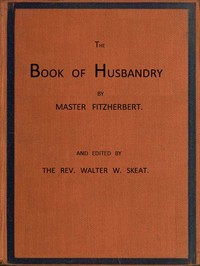
The Book of Husbandry by Anthony Fitzherbert
Let's get this straight from the start: This is not a storybook. There's no plot in the traditional sense. Published in 1523, Anthony Fitzherbert's The Book of Husbandry is exactly what it says on the tin—a practical manual for farmers. Fitzherbert, a lawyer and landowner, wrote it to share the collective knowledge of rural life. He walks you through the entire agricultural year, month by month.
The Story
Think of it as the ultimate guide to running a Tudor-era homestead. Fitzherbert covers everything. He tells you how to choose good plough oxen, how to sow your fields, and how to manage your staff. He gives advice on caring for livestock, from diagnosing a sheep's illness to fattening pigs. There are instructions on hedging, ditching, and even beekeeping. The book is a calendar of relentless work, where success is measured by full barns and healthy animals. The 'characters' are the farmer, his family, his workers, and the land itself. The 'drama' is the constant battle against weather, blight, and poor planning.
Why You Should Read It
This book is a time machine. It completely bypasses the palaces and politics we usually hear about and drops you right in the muddy fields. Fitzherbert's voice is wonderfully clear and direct. You can feel his frustration with lazy workers and his respect for a job well done. Reading his precise instructions—like how to build a proper haystack—makes you appreciate the incredible intelligence embedded in pre-industrial life. This wasn't just farming; it was a complex science of observation and tradition. It’s humbling and deeply interesting. You start to see the modern world differently, understanding where so many of our rhythms and sayings actually come from.
Final Verdict
Perfect for history buffs who want to get their hands dirty, for gardeners curious about the roots of their craft, or for anyone who loves primary sources. If you enjoy shows about survival or homesteading, you'll find the original version here. It’s not a page-turner of action, but a slow, satisfying read that changes your perspective. Keep an open mind, and you'll discover one of the most honest and important books of its age.
There are no legal restrictions on this material. You do not need permission to reproduce this work.
Matthew Hill
1 year agoSurprisingly enough, the flow of the text seems very fluid. Truly inspiring.
Liam Brown
1 year agoThis is one of those stories where the arguments are well-supported by credible references. This story will stay with me.
Robert Davis
3 months agoThe fonts used are very comfortable for long reading sessions.
Mary White
2 months agoI started reading out of curiosity and it creates a vivid world that you simply do not want to leave. Exactly what I needed.



Barbara Anderson
5 months agoI stumbled upon this title and it challenges the reader's perspective in an intellectual way. Don't hesitate to start reading.