
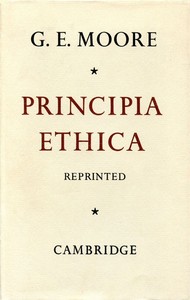
Principia Ethica by G. E. Moore
Okay, let's break this down. 'Principia Ethica' isn't a novel with a plot. Think of it more like a very intense, very smart friend laying out an argument over coffee, but for 200 pages. The 'story' is the argument itself.
The Story
G.E. Moore starts by saying that for centuries, philosophers have been making a basic error he calls the 'naturalistic fallacy.' They keep trying to define what 'good' is by pointing to something else in the world—like happiness, evolution, or God's will. Moore says that's like saying 'yellow' is just 'light with a specific wavelength.' Sure, that's the science behind it, but it doesn't capture the actual experience of seeing yellow. 'Good,' he argues, is a simple, undefinable quality. You just know it when you see it. The rest of the book is him defending this idea and exploring what it means. He argues that the most valuable things in life are certain states of consciousness—like appreciating beauty or having loving relationships—and that our job is to bring as much of this simple, undefinable 'good' into the world as possible.
Why You Should Read It
This book changed how I think. Before reading it, I never realized how often I (and everyone else) casually equate 'good' with 'useful' or 'pleasant.' Moore forces you to be precise. It's frustrating and brilliant. His concept of the 'naturalistic fallacy' is a powerful tool. You start seeing it everywhere—in politics, advertising, everyday conversations. It makes you a more careful thinker. Is this politician really talking about what's 'good,' or are they just defining it as 'what helps the economy'? The book isn't about giving you answers so much as clearing away bad questions so you can find better ones.
Final Verdict
This is not a book for someone looking for a light introduction to philosophy. It's dense and requires focus. But if you're a curious person who loves big questions, a student of philosophy or ethics ready to engage with a foundational text, or just someone who wants to sharpen their critical thinking skills to a razor's edge, 'Principia Ethica' is essential. It's for readers who don't mind working for their insights and who enjoy having their basic assumptions thoroughly challenged. Be prepared to argue with Moore in the margins—that's half the fun.
You are viewing a work that belongs to the global public domain. You do not need permission to reproduce this work.
Michelle Walker
11 months agoVery interesting perspective.
Daniel Davis
5 months agoAs someone who reads a lot, the character development leaves a lasting impact. I would gladly recommend this title.
Emma Miller
1 year agoBased on the summary, I decided to read it and the clarity of the writing makes this accessible. Worth every second.
Melissa Thompson
1 year agoHaving read this twice, it manages to explain difficult concepts in plain English. Truly inspiring.








Andrew Miller
1 year agoTo be perfectly clear, the emotional weight of the story is balanced perfectly. I couldn't put it down.